August 20, 2011 Nagoya Day Trip: Toyokuni Shrine
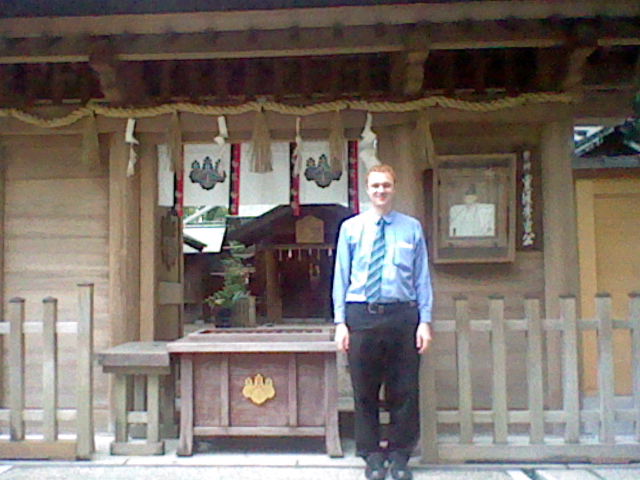
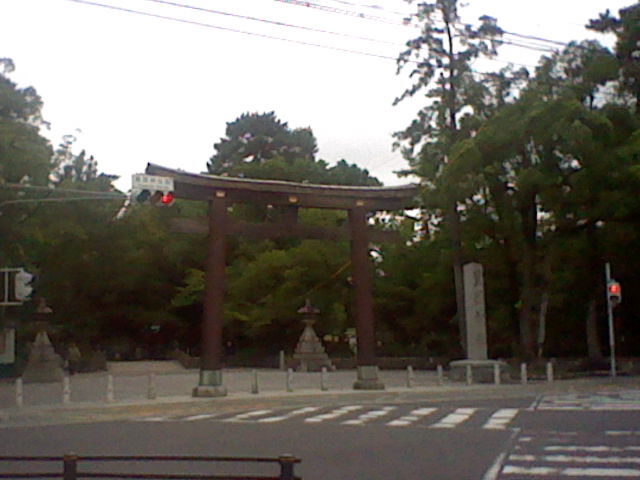
| This time, I went to Toyokuni Shrine, which is the Shinto shrine dedicated to Toyotomi Hideyoshi. Anyone even vaguely familiar with Japanese or Korean history should know that name. Read on for more details.
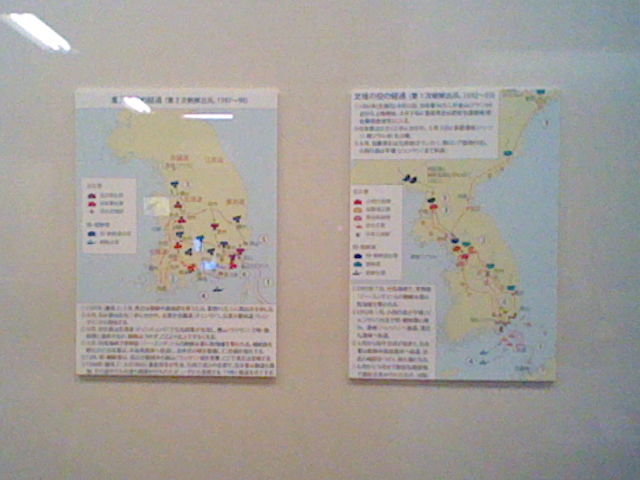
By the 1590s, Hideyoshi had succeeded in unifying Japan, which before him had been divided for centuries under various houses. Emboldened by uniting Japan into one state, Hideyoshi then came up with a grand plan to not only conquer China, but India, as well! How or why he planned to accomplish this will never be known, because he was ultimately defeated. Some speculate that he only mounted the invasion to get rid of excess samurai who could rise up and challenge his power. Korea stood in the way of China, so he decided to march across it. The Koreans were less than thrilled, and a series of invasions of Korea ensued (one in 1592 and one in 1597, both ultimately failures due to Yi Sun-shin's iron-clad "Turtle Ships" (Korean: geobugiseon) and other factors in favor of the Joseon Dynasty's military). The united Japan passed from Hideyoshi's hands to those of Tokugawa Ieyasu, who began the Tokugawa Shogunate/Bakufu reign (which lasted until the mid-1800s). Ieyasu also closed Japan during "Sakoku," or "Closed Country." During Sakoku, outsiders were not permitted into Japan except for the Dutch at Dejima and the Chinese at a slightly larger artificial island, also in Nagasaki Bay. The little western learning that entered Japan during that period was via Dutch texts, and was called "Rangaku." Note that "Ran" is a corruption of "land" from "Holland," and "gaku" means "study," so the term "Rangaku" literally refers to "Dutch learning." Eventually, in the 1850s, Commodore Perry sailed into Japan and forced Japan to open up to the outside world. However, jumping back to Hideyoshi, it was Hideyoshi who unified the country, and Tokugawa Ieyasu (his immediate successor) who put Japan into nearly 300 years of isolation.
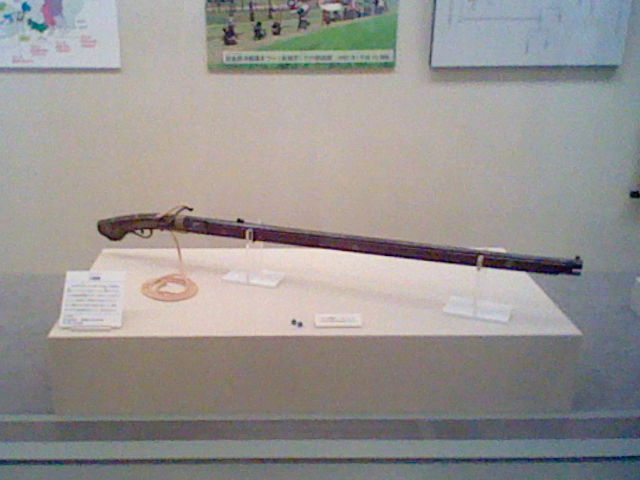
Note that until the 1500s, samurai were quite formidable on the battlefield, but this changed in the 1500s, because ashigaru ("light-feet," or infantry), often conscripted peasants, could carry arquebuses and do massive damage on the battlefield without extensive training or skill.
|

June 5, 2011 Nagoya Day Trip: Nagoya Station and Nagoya Castle (Nagoya-jou)
 | I asked a couple, who were strolling romantically around Nagoya Castle, to take this picture of me in front of the moat and one of the buildings of Nagoya Castle. Nagoya Castle was constructed in 1610 by the Owari branch of the Tokugawa Shogunate for defense near Ise Bay. Nagoya City is based around this castle. Although the castle's defensive function is no longer in use, it is still an important icon of Nagoya, an important historical location, and a place around which joggers can jog and couples can stroll romantically in the evening. | |
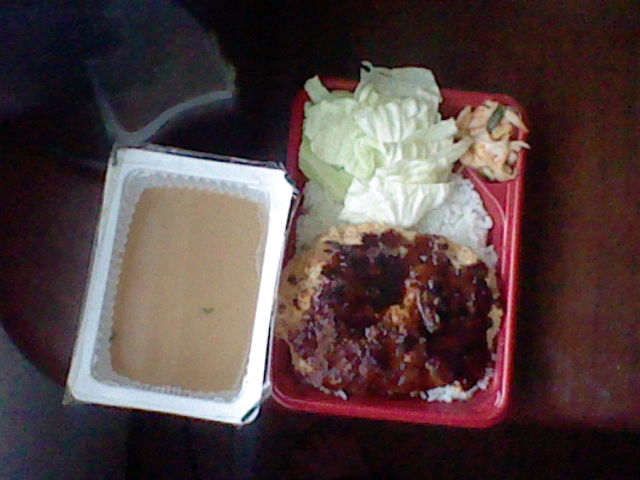 | Before heading out for Nagoya on June 5, 2011, I made sure to eat a full meal so I wouldn't be tempted to buy an expensive meal in Nagoya. Here we have miso soup, tonkatsu (pork cutlet), a bit of discounted 10 yen cabbage, and some kimchi in the compartment. This is pretty much the only type of Japanese food I know how to cook at this point. All the food in the picture comes out to less than 150 yen, which is a good deal in Japan. Perhaps I will learn some more Japanese recipes in the future. | |
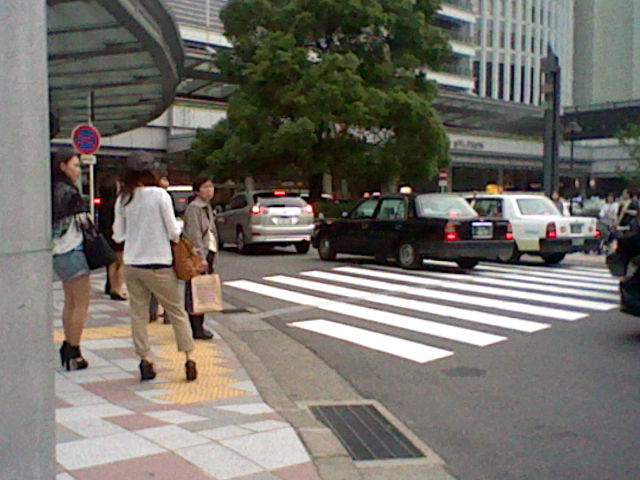 | This is the main entrance of Nagoya Station. Nagoya Station is an excellent location for collecting StreetPass hits on one's Nintendo 3DS due to the large number of people who commute through it everyday. | |
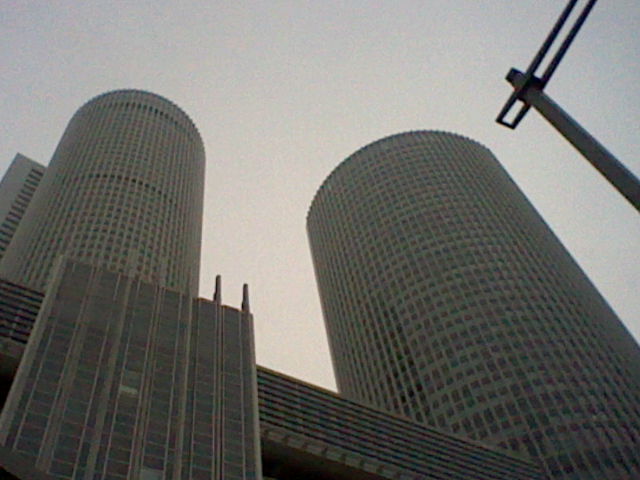 | Here are some interesting facts about Nagoya Station. It has around 410,000 square meters of floor space, making it the largest train station in the world. It has two towers, one of which is 59 floors (the hotel tower) and the other of which is 55 floors (the office tower). It is the 6th busiest station in Japan with around 1,140,000 people passing through it per day. | |
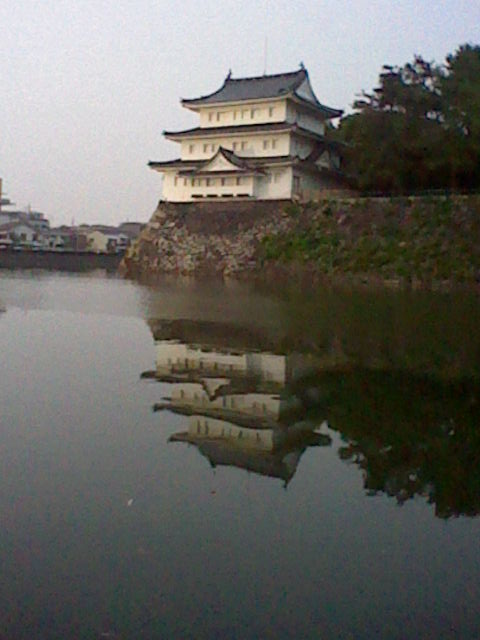 | Here we have another picture of Nagoya Castle. Note the reflection in the moat. As previously mentioned, Nagoya Castle was built in 1610 during the Tokugawa Shogunate. The Meiji Restoration occurred with the ascension of the Meiji Emperor in 1868, and resulted in the end of the Tokugawa Shogunate and Japan's transition to a much more modern state. Nagoya's fortifications also became less important in 1868. | |
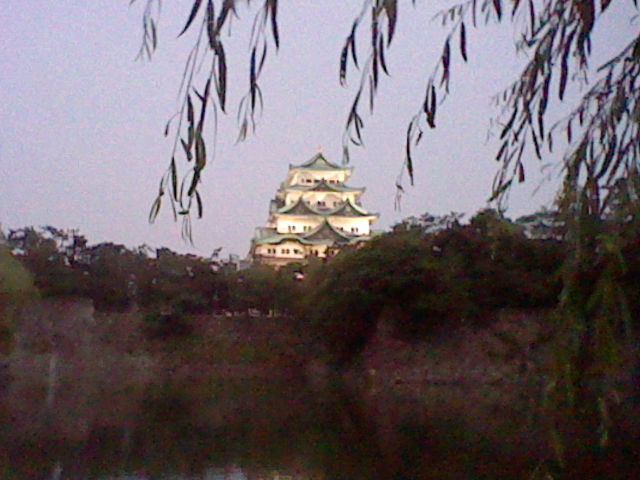 | Sunset was supposed to be at 7:04 PM. However, I took this picture at 7:09 PM and still got some light. Lucky me. This is the main building of Nagoya-jou (Nagoya Castle). | |
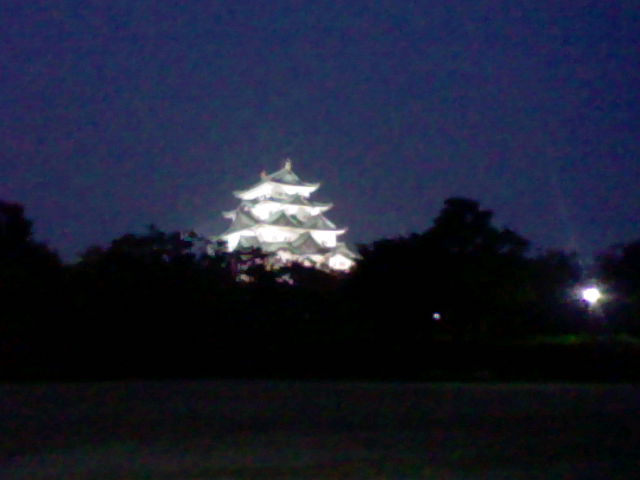 | By the time I took this picture, more than 20 minutes had passed since sundown, so I got a nice night shot. Note how they illuminate Nagoya-jou at night. | |
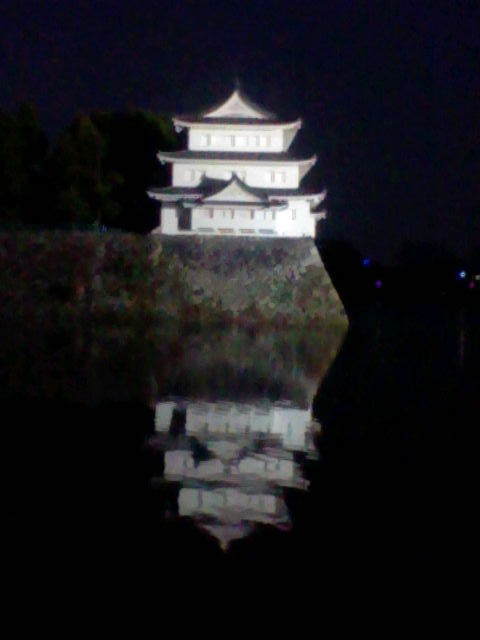 | Here is one of the prizes of the bunch. One of Nagoya-jou's outer buildings is reflecting into the moat. This spot is very romantic; I ended up taking a picture of a couple in front of Nagoya-jou and its moat. | |
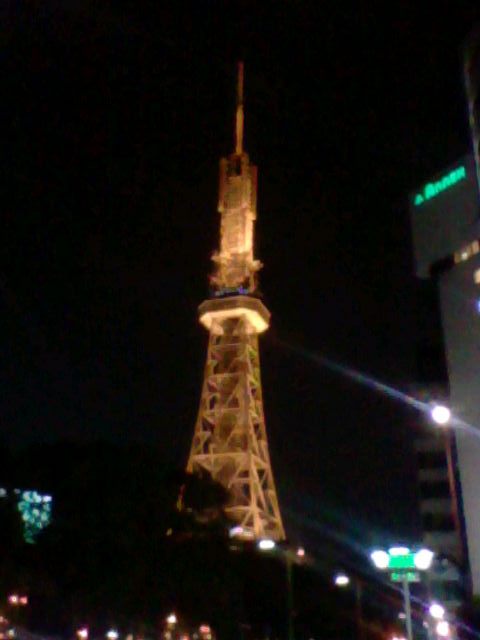 | Here is Nagoya's TV tower. It is near a junior college and a university, which is why I passed by it. The reason I wanted to go to some college campuses was to post a flyer for language exchanges, because I want to improve my Japanese. | |
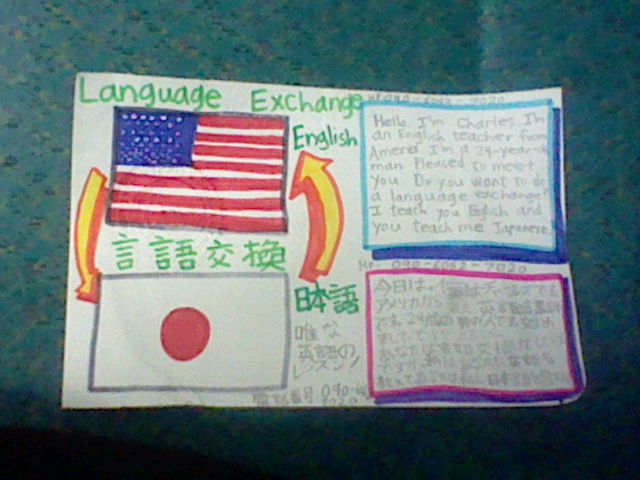 | Here is the flyer. Unfortunately, all the colleges I visited in Nagoya (in order to find a bulletin board to post this ad) were buildings instead of outdoor campuses, and were locked by that time. Their outdoor bulletin boards were either nonexistent or not publicly accessible. |