| 
Japan-Related News | The Death's-Head Hawkmoth, Taisō Renshū, and Student Diary Entries on the Norwegian Pancakes Lesson (the latest one, in which the parents visited and watched)
Posted on 25 October 2013, 18:45 JSTThis week was quite eventful:- On my way home today, I found a death's-head hawkmoth (i.e. the "Silence of the Lambs" moth) on the ground and photographed it. Click on the image to zoom in.
- Today, I received feedback from the Norwegian pancake lesson that we did yesterday, in which 20 parents came in and watched. The feedback was positive, and some students wrote about it in their diaries; I got copies of some of these diary entries and scanned one of them, and the drawings from another. Read on to see them.
- On Wednesday, we continued to do taisō renshū, or exercise practice (running laps).
I have photos of all these things in this article. Read on to see them and read about them. |  |
On Wednesday, we had "exercise practice" (体操練習), a recurring thing. This involves running laps. We were supposed to have this again today, but it was canceled due to rain. I ran seven laps, 400 meters each, for a grand total of 2.8 kilometers. The fastest student that day managed eight laps.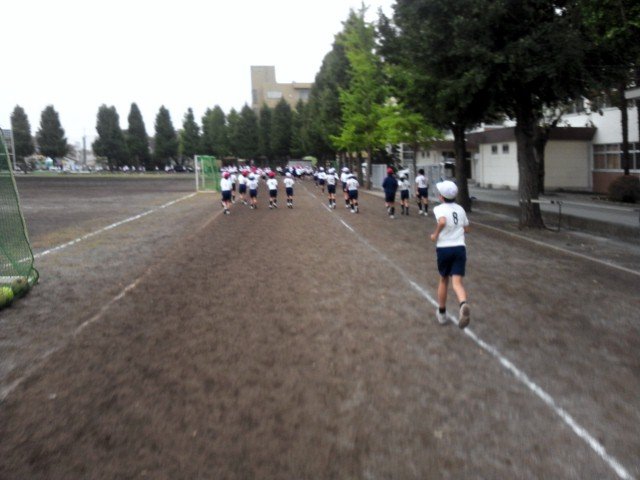
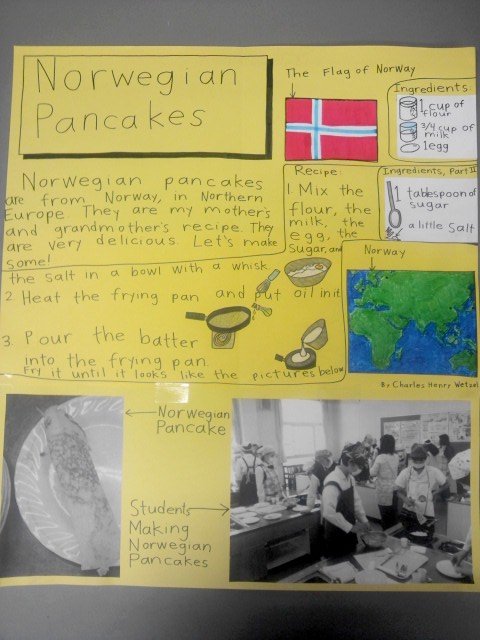
Yesterday, we made Norwegian pancakes again with class 6-2. This lesson was special, because the parents (i.e. 19 mothers and one token father) showed up and watched and tasted the Norwegian pancakes. I got feedback about yesterday's Norwegian pancake lesson in the form of photocopied diary entries from students who enjoyed the lesson. Apparently the lesson was a big hit with both the students and the parents. My boss says that she heard about one or two students who have already gone home and made them at home. Here is one of the diary entries that I translated into English: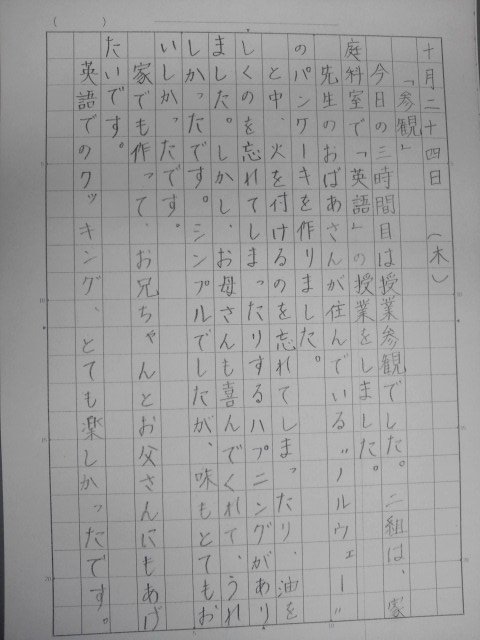 | "October 24 (Thursday) 'The [Parents'] Visit' Third period today was a class visit [by the parents]. Class 2 had an 'English' class in the home economics room. We made the pancakes of Norway, where the teacher's grandmother lives.* In the middle of that, there was a happening (the student wrote hapuningu) in which I forgot to turn on the flame [on the stove], and I forgot to spread the oil. However, I was happy because my mother was delighted. It was simple, but the taste was very delicious. I want to make it at home, and give it to my older brother and my father. Cooking in English was very fun." *Translator's note: my grandmother lives in Fairfax City, Virginia—the student must have been confused when I explained that my grandmother's family came from Norway [long, long ago, before she was born]. |
One student drew anime/manga-style drawings of the Norwegian pancake-making process:
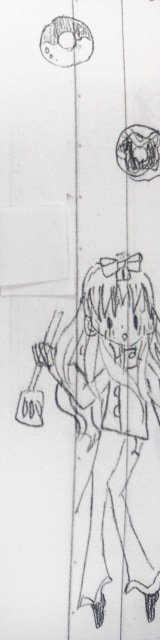 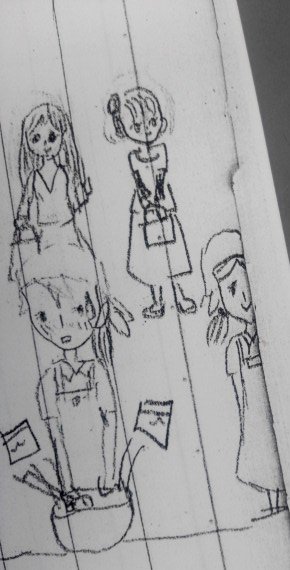 I taught the lesson almost entirely in English (not much Japanese is necessary for a cooking lesson, since all the ingredients and tools are right there, and very simple to teach using only English). Therefore, the students came up with various improvised Japanese names for the pancakes they had just made when they wrote their diary entries in Japanese: - ノルウェーのパンケーキ (Noruwee no pankeeki, pancakes of Norway)
- ノルウェーのロールケーキ (Noruwee no Roorukeeki, roll cakes of Norway)
- ノルウェー風パンケーキ (Noruwee-fū pankeeki, Norwegian-style pancakes)
- One student referred to them as "pancakes [that are] (...) fried and become about the color of our kanji (Chinese character) notebooks."
One of the visuals that I used to make this educational, a poster:
 Back |

